Argentine Forensic Anthropology Team (EAAF) was founded in Argentina and is headquartered in Buenos Aires. Since 1984, it has worked on the comprehensive investigation of disappearances and murders committed by the state terrorism regime between 1974 and 1983, serving as an official expert for the federal judicial system.
Building on that experience, its other main focus is the investigation of disappearances under democratic rule. EAAF emphasizes families’ needs and coordination with prosecutors’ offices and courts throughout the country to probe cases of missing persons and unidentified buried bodies, and to consolidate a national database.
The Team is also part of the Islas Malvinas/Falkland Islands Humanitarian Project aimed at identifying Argentine combatants who perished on the islands and were buried without identification. This project is coordinated by the International Committee of the Red Cross (ICRC).
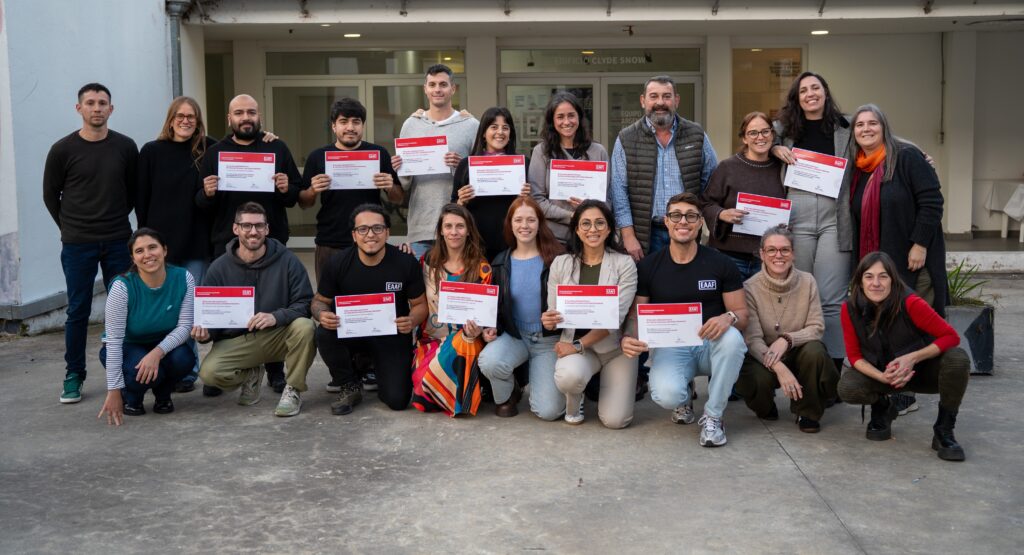
EAAF provides local and regional courses and training programs through its International Center for Training in Forensic Sciences, located at the Memory and Human Rights (ex-ESMA) site in Buenos Aires.
Crimes Against Humanity
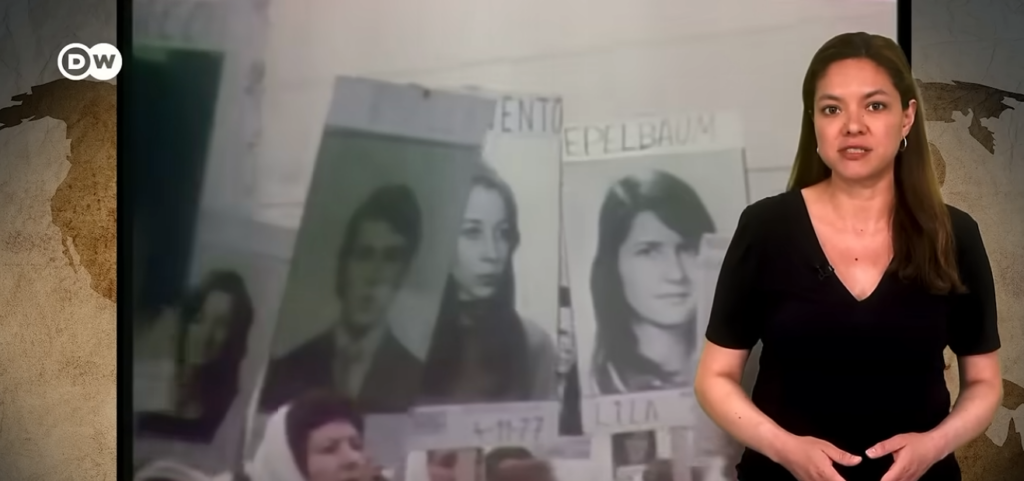
The search for people detained and disappeared under state terrorism in Argentina is a historical process involving numerous actors from civil society and the state. The EAAF takes an interdisciplinary approach, based on forensic science, to locate, recover, identify and return these people’s remains to their families. As an official expert for the federal judicial system, it contributes scientific evidence that serves as legal proof in trials over crimes against humanity and can give families answers about what happened to their loved ones.
EAAF’s work began in Argentina in 1984 at the request of civil society organizations such as the Familiares de Personas Detenidas y Desaparecidas and Abuelas de Plaza de Mayo. Family members provide the Team with critical information about the disappeared person (their life history, political activism and physical characteristics), both for the historical reconstruction of events and for genetic identification.
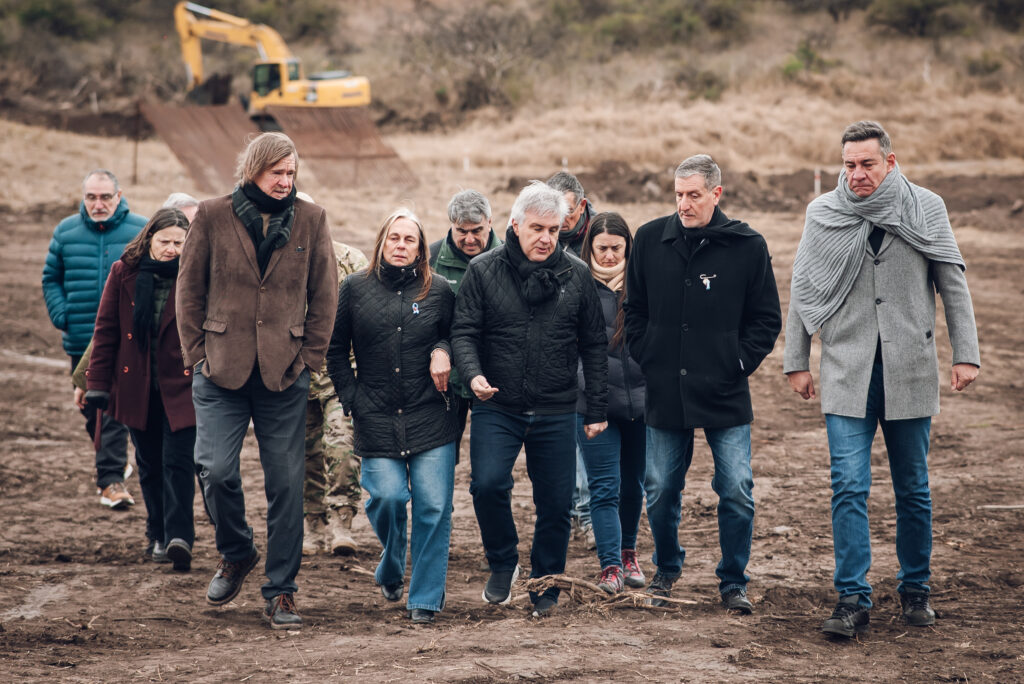
Through investigations and field searches, EAAF has been able to find the remains of people forcibly disappeared between 1974 and 1983 in municipal cemeteries, former clandestine detention centers, and public places such as empty lots, quarries and a hospital. The Team has worked at more than 90 exhumation sites across the country, identifying over 850 disappeared persons and finding over 1,650 people in total. Nearly 150 of the identified individuals are victims of state repression whose whereabouts were traced based on the compilation and systematization of official documentation, and who were identified using fingerprint records. In many cases, the bodies could not be recovered, generally because cemeteries have a practice of transferring skeletal remains to an ossuary once a certain period of time has passed since burial. To investigate this phenomenon, EAAF developed a forensic database of crimes against humanity cases that compiles information on each disappeared person along with testimony from survivors.
Given the nature of state repression at the regional level, through Operation Condor, EAAF also works on cases of enforced disappearance in Southern Cone countries. It has conducted exhumations in Uruguay and Paraguay and shared its forensic data bank with those countries for genetic comparison. The data bank consists of DNA samples from the located bodies of unidentified missing persons and of DNA from the relatives of missing persons. These two data sets are compared massively.
EAAF protects the confidentiality of the information provided by families, and its sole objective is identification. Family members can contact us by calling 0800 345 3236, by emailing inciativa@eaaf.org or via this link to the form .
Details regarding EAAF’s work on cases of crimes against humanity can be found on La Búsqueda website, which compiles information on the scientific methods and investigative strategies used in searches, exhumations and identifications. The website offers updated statistical data, the visualization of information on identified and unidentified individuals, and geolocation data for search sites and findspots.
To further explore this narrative – showing the interrelationship between the location and date of abduction, detention center, discovery of the body, and its burial – EAAF also created the website Sector 134-Avellaneda Cemetery.
Disappearances under Democracy
Building on the experience it gained in investigating crimes against humanity, EAAF began to intervene in cases of disappearances that have occurred under democracy in Argentina. This universe of cases is marked by very diverse contexts and time periods. Institutional violence, gender-based violence and drug-related crime are some of the contexts addressed. In many of these cases, the common stumbling block is the lack of a national forensic database that would enable the systematic comparison of information on deceased persons of unknown identity with that of persons whose whereabouts are unknown. This type of database houses both genetic and documentary information. Currently, information on each case is scattered across prosecutors’ offices and courthouses throughout the country. EAAF’s work seeks to rectify this.
Through institutional agreements with provincial governments, supreme courts and public prosecutors’ offices, EAAF compiles case information and is building a forensic database of disappearances in Argentina’s democratic era. The database draws on court cases, formal complaints by families, government documentary sources, information collected by civil society organizations, and information gathered from social media and the press.
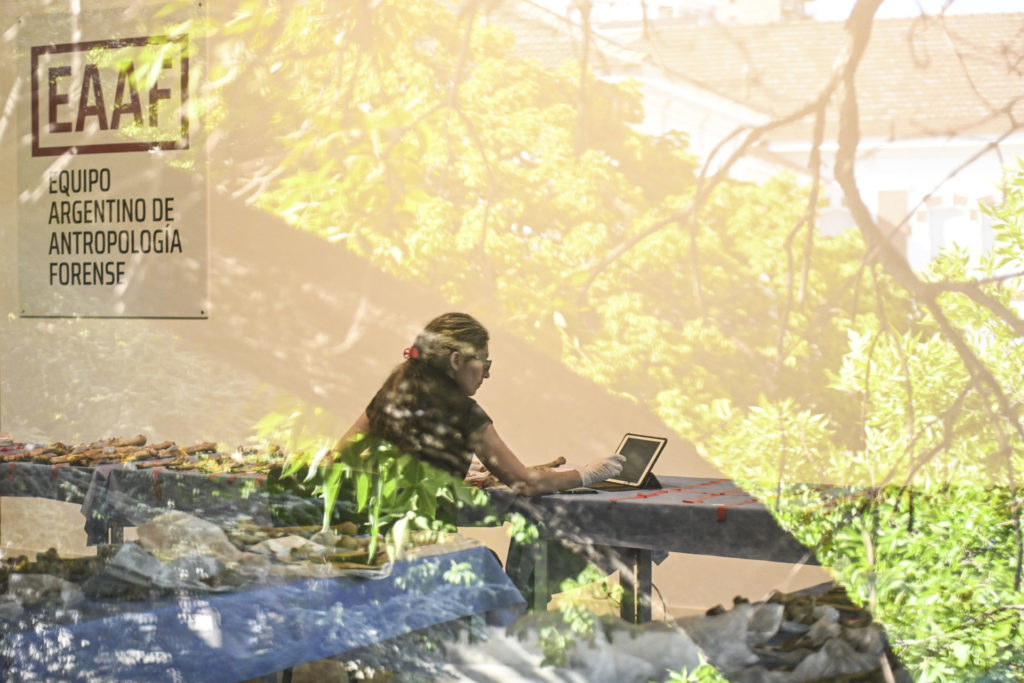
At the request of judges, prosecutors and family members, EAAF also participates in judicial investigations as an expert witness (as an official expert and also as a party-appointed expert) in cases involving both the search for missing persons and the discovery of unidentified bodies. Depending on the specific nature of each case, EAAF carries out different types of intervention: analysis of court records to develop hypotheses about what occurred; investigation of documentary sources, review of expert reports, police reports, press coverage, etc.; interviews with family members and witnesses; and search, recovery, genetic and anthropological analysis, and identification of bodies.
EAAF also provides training for prosecutors, judges, forensic experts and security forces aimed at strengthening their approach to cases of disappearances and at building networks. It further collaborates on developing protocols and guidelines for the judicial system and security forces.
Families of missing persons who wish to register their case and provide a genetic sample can call the toll-free number 0800-345-3236, email us at casos@eaaf.org or complete an online form with information regarding their case.
Islas Malvinas/Falkland Islands Humanitarian Project
The war between Argentina and Great Britain over the Islas Malvinas/Falkland Islands took place from April 2 to June 14, 1982. A total of 649 Argentines died, of whom 237 were buried in the Argentine Military Cemetery in Darwin. There, 109 graves (2 of them mass graves) bore the first and last names of the deceased combatants, while 121 graves simply bore the inscription “Argentine soldier known only to God.”
The objective of the Islas Malvinas/Falkland Islands Humanitarian Project is to identify the soldiers buried in those unnamed graves. The identities of 121 soldiers have been restored, with 5 soldiers yet to be identified.
In collaboration with former soldiers and family members, EAAF’s work began in 2009 with historical research, which included reviewing military documentation, hospital records, and testimony from veterans and family members. In 2013, it began interviewing family members and collecting samples. This information was entered into a forensic database. Based on this preliminary work and the demands of the families and other members of civil society, in 2016 the governments of Argentina and Great Britain – with the intermediation of the International Committee of the Red Cross (ICRC) – signed a diplomatic agreement formally launching the Islas Malvinas/Falkland Islands Humanitarian Project Plan. EAAF is involved in all the project’s stages.
Interviews were conducted and samples were collected from family members scattered throughout Argentina, in collaboration with the Argentine Ministry of Justice and the General Notary Office of the Nation (Escribanía General de la Nación). In 2017 and 2021, EAAF participated in the two international forensic missions to the Darwin cemetery aimed at analyzing the remains and selecting DNA samples from the unidentified soldiers. Since then, it has been conducting DNA comparisons at its Forensic Genetics Laboratory, located in Córdoba province, which have enabled the identifications made thus far.