EAAF’s primary activity is forensic investigation. This consists of searching for and identifying missing persons in order to return them to their families and obtain scientific evidence regarding what occurred.
EAAF is not always involved in every stage of the investigation, but it does always operate within institutional frameworks, which are mainly judicial and humanitarian.
The Team intervenes in other contexts of grave human rights violations where violence does not always result in the victim’s disappearance, such as deaths resulting from the repression of social protests and cases of femicide, among others.
CONTEXTS AND STAGES
The Team’s intervention in an investigation begins at the request of families, international organizations (ICRC, United Nations), special courts, tribunals, prosecutors or judges. In numerous countries worldwide, it is called upon to investigate different types of incidents or contexts where multiple issues are present.
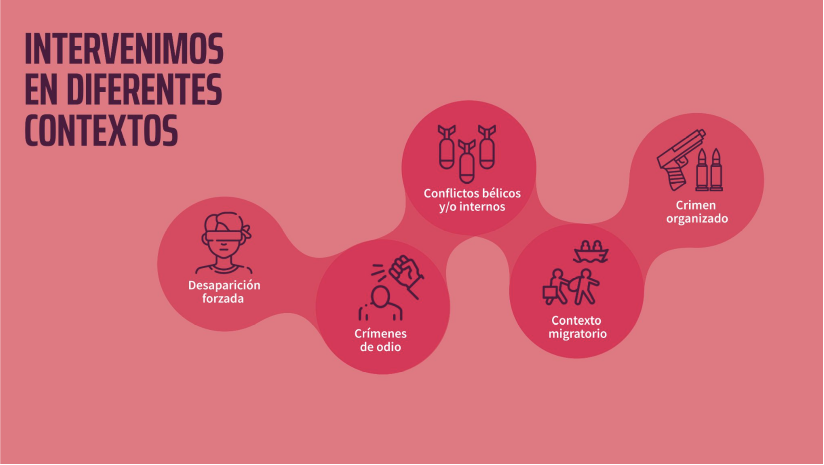
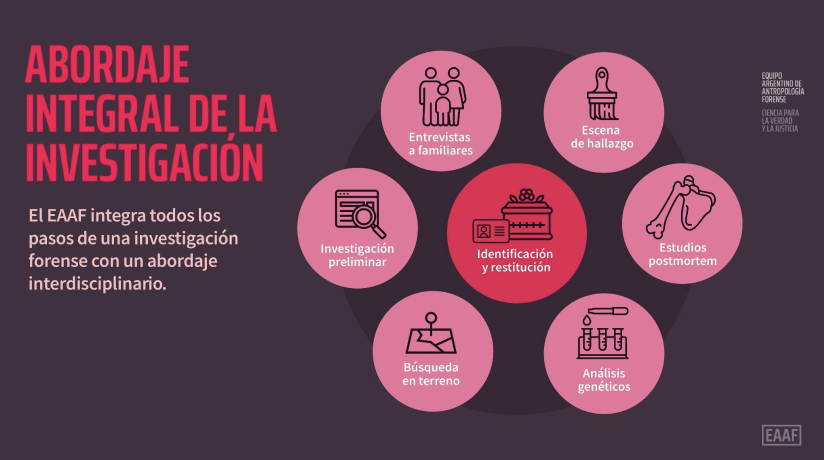
EAAF may be involved in all or some parts of the forensic investigation process, which is interdisciplinary and can be divided schematically into stages: preliminary investigation, interviews with family members and witnesses, field searches, survey of the scene of the findings (findspot), recovery of skeletons or skeletal remains and associated evidence, postmortem studies, and genetic analysis. These stages are not linear and form part of the identification work that leads to returning the remains. In cases that do not involve disappearances, the objective is to determine how events unfolded and the role of those implicated.
The starting point for any intervention is the preliminary investigation. Documentary research involves retrieving various records, such as death certificates, police files, forensic police records, fingerprints and judicial files, among others. Systematizing these records can help establish whether they are related to the unidentified remains. By linking information on disappearances to the movement of bodies through morgues and cemeteries, it is often possible to rectify the identification system’s shortcomings (whether intentional or not) and transform bureaucratic records into crucial evidence for restoring identity.
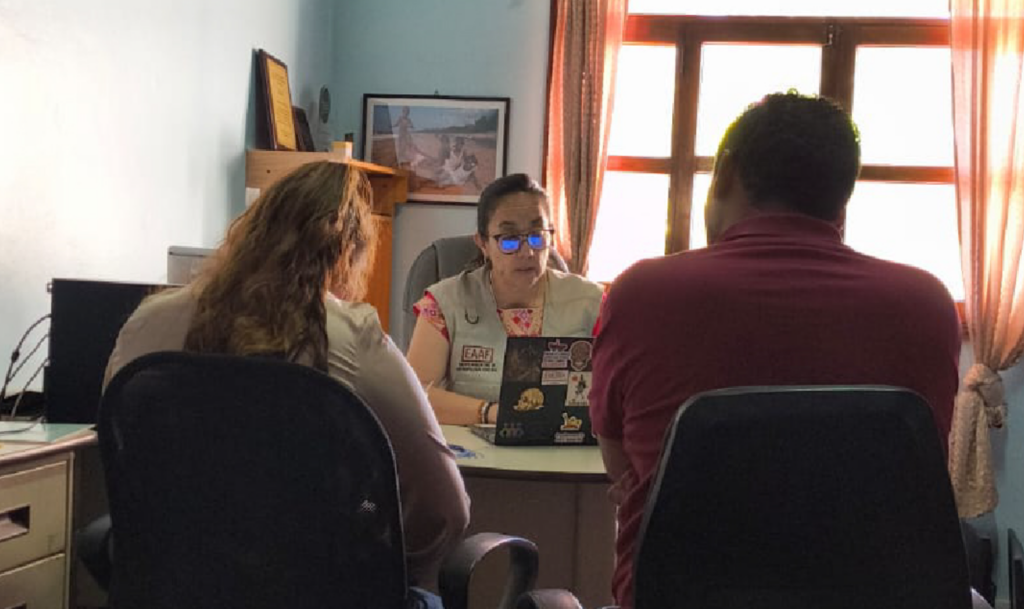
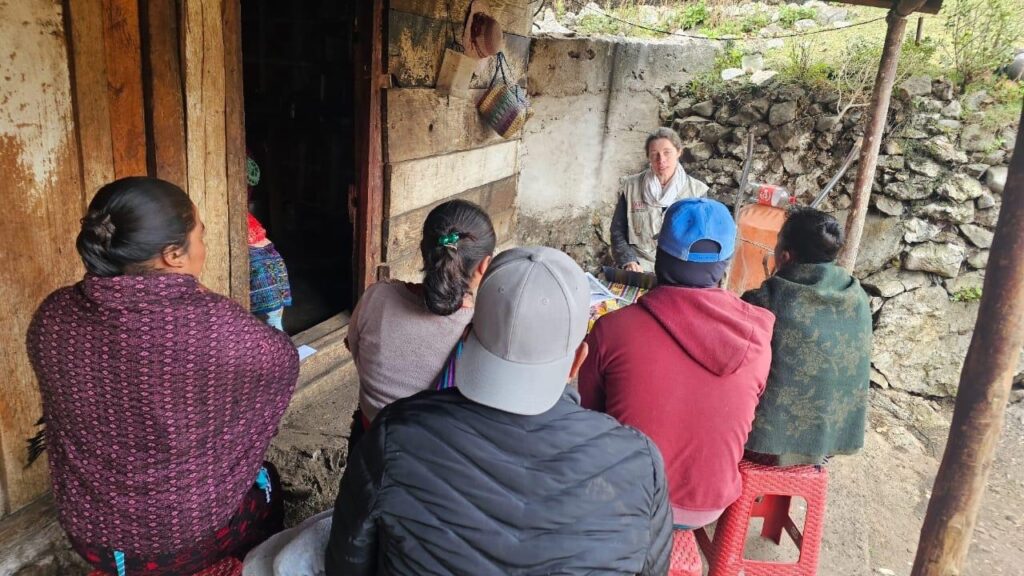
The investigation also entails analyzing other documentary and historical sources, as well as interviewing eyewitnesses and relatives of the missing persons.
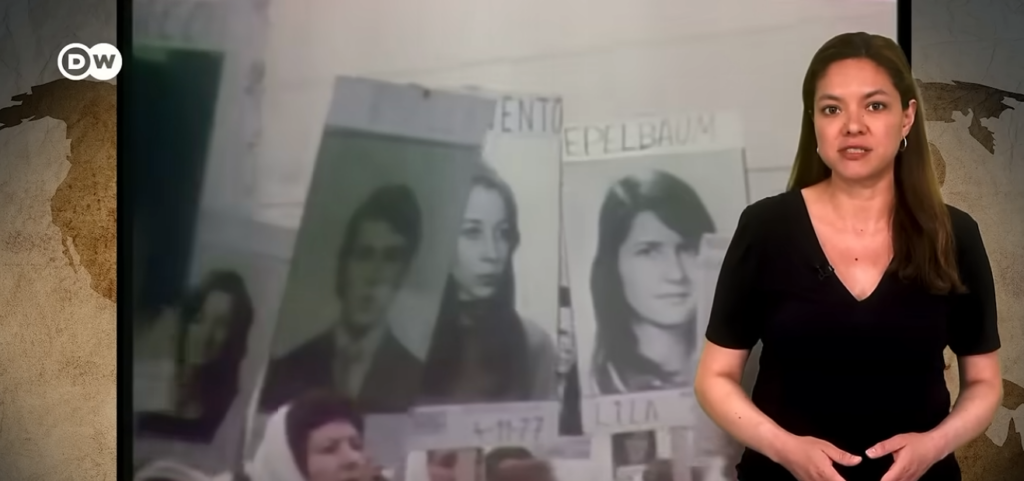
The investigation combines two universes. When a person’s fate is unknown, the focus is on potential search locations. Conversely, when unidentified bodies are recovered, the investigation focuses on identification.
INVESTIGATION AND SEARCH TECHNOLOGIES
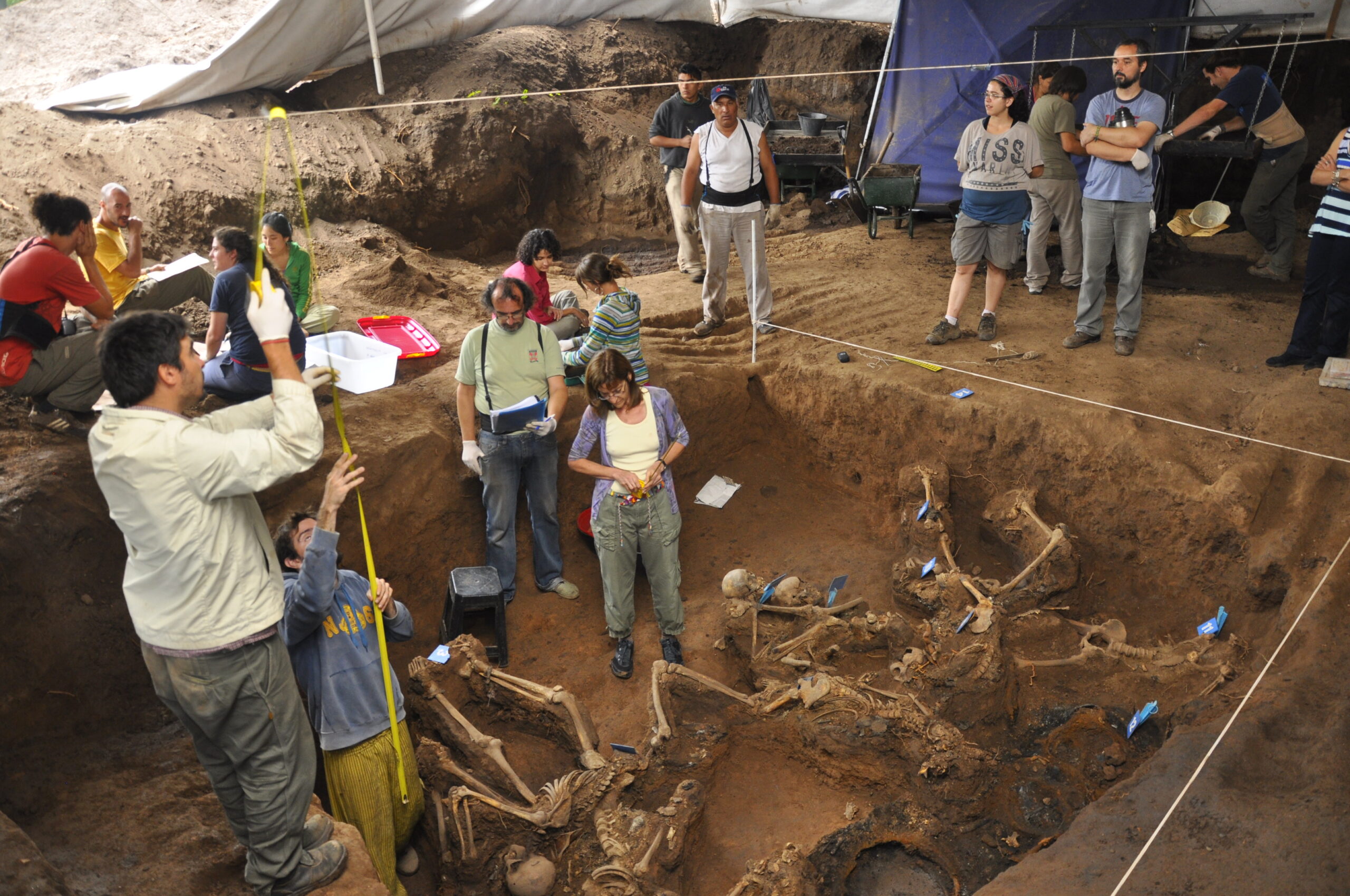
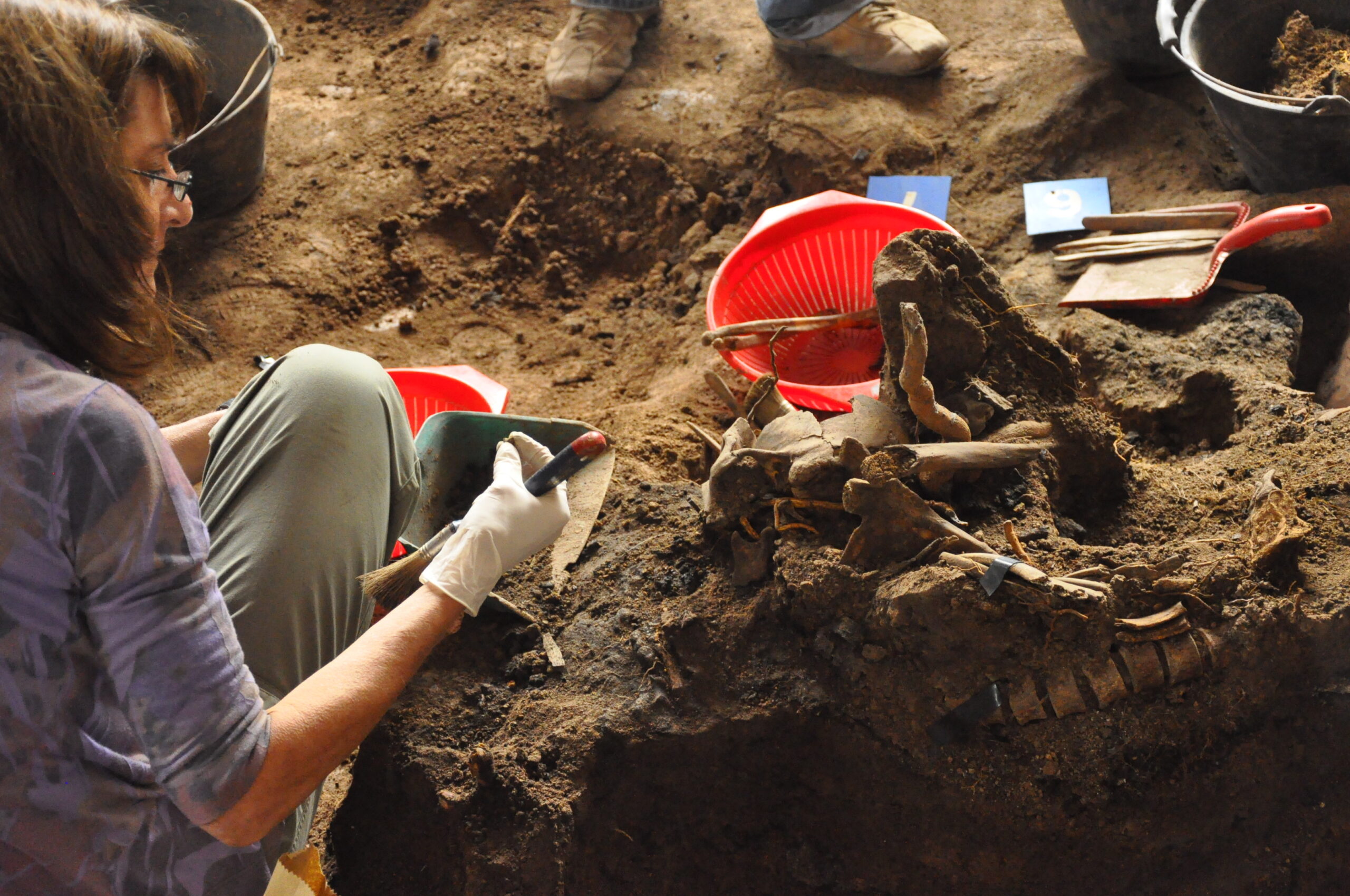
Once EAAF identifies the sites of interest for the search, it applies forensic archaeology methods and techniques to conduct a scientific exhumation. At the findspot, skeletal remains and associated evidence (such as ballistic material, clothing, personal items and other artifacts) are recovered. Records are made and analyses conducted to reconstruct the circumstances of death and the burial context. The associated evidence and skeletal remains are prepared and sent to the Forensic Anthropology Laboratory for analysis. This entire procedure is documented, and the evidence is transferred with a chain of custody.
In response to the concealment of bodies or the lack of precise burial location information, EAAF has incorporated innovative and effective methods for field searches.
The Team works with remote sensing technologies, such as satellite imagery, ground-penetrating radar, resistivity, multi-spectrometry and hyper-spectrometry, among others. These technologies, which retrieve information remotely, were used initially in other contexts (such as agronomy, space research, climate, deforestation and archaeology) and are increasingly utilized in the forensic field.
.
.
Ground-Penetrating Radar (Georadar)
This involves mapping the physical properties of the subsurface through measurements taken at the surface. The resulting images indicate whether the subsurface has been disturbed, but do not reveal what caused the disturbance.
Photo Analysis
EAAF uses image analysis techniques such as orthophotography. An orthophotograph is obtained from a set of aerial images taken from an airplane or satellite, which are corrected to represent an orthogonal projection without the effects of perspective. This allows for exact measurements, unlike a simple aerial photograph, which will always present distortions due to perspective, altitude or the speed at which the camera is moving. With the help of software, these images can be used to produce precise georeferenced images and 3D digital elevation models. Depending on when the images were taken, conclusions can be drawn about circumstances or changes in the ground that may be significant to the investigation.
.
TOOLS AND TECHNIQUES FOR IDENTIFICATION
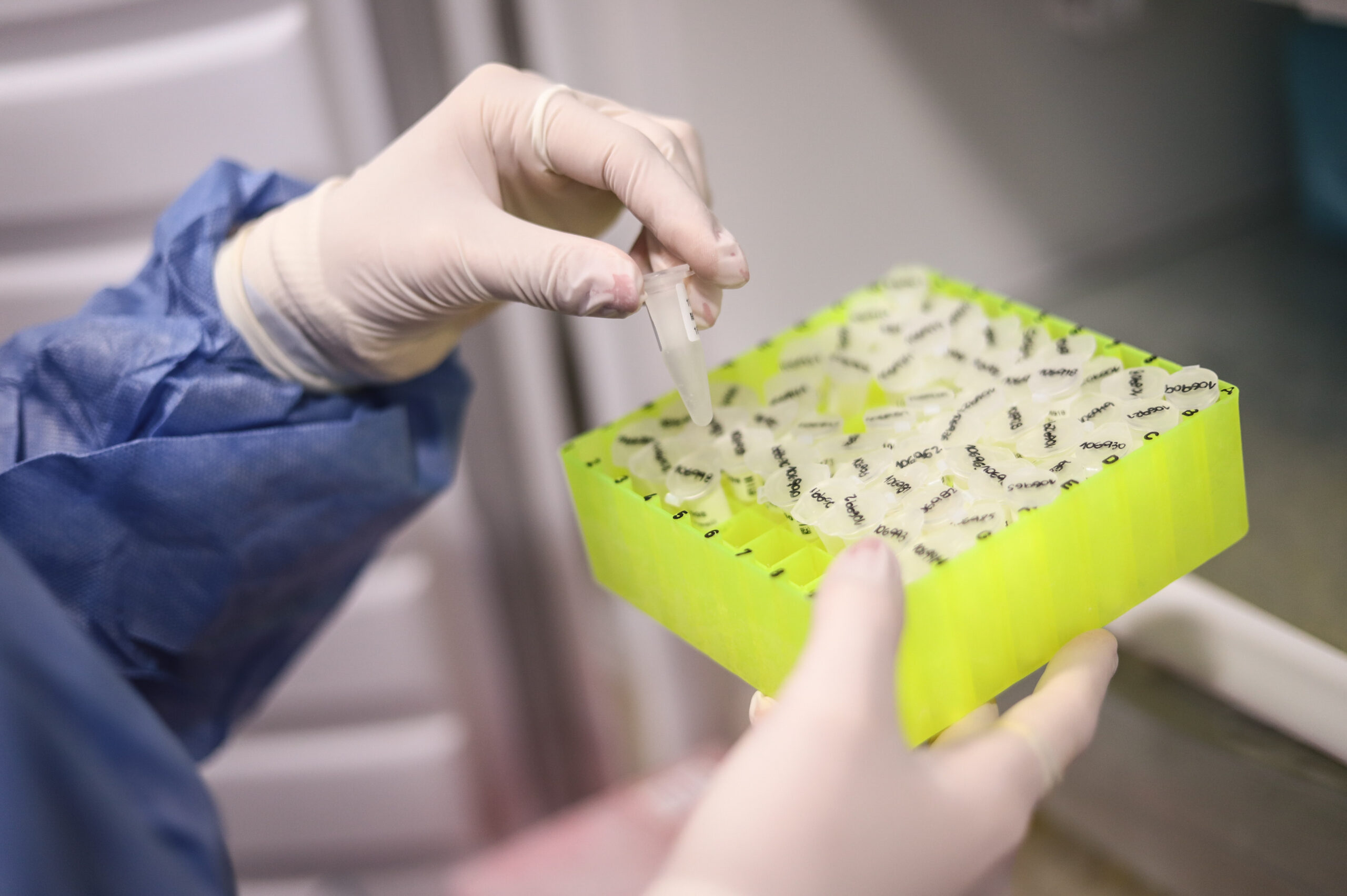
Identification is comparison. The comparison of information obtained from the analysis of unidentified bodies must be compared with the information on missing persons gathered during the investigation. DNA and fingerprints are individualizing, but other aspects are also analyzed to achieve identification.
Physical Anthropology and Odontology
The analysis of recovered skeletons using biological anthropology techniques allows for determining a biological profile: sex, estimated age and stature. Dental characteristics can be an effective identification technique if good records from when the person was alive are available. The forensic anthropology laboratory also analyzes pathological conditions and lesions in bones prior to death as well as perimortem injuries (those occurring near the time of death). These analyses can sometimes provide information about the cause of death. In additional, this individualizing information, when integrated with genetic data and investigative findings, serves to establish and/or corroborate identity hypotheses.
Genetics
Genetics has enabled a breakthrough in the identification of missing persons. EAAF was a pioneer in its application and maintains an accredited forensic genetics laboratory equipped with state-of-the-art technology. Comparing the DNA from unidentified remains with the DNA of relatives searching for missing persons is necessary for the genetic identification of a body. This comparison is conducted systematically using databases of genetic profiles from recovered skeletal remains and family reference samples.
However, sometimes it is not possible to obtain a genetic profile from the analyzed skeletal remains, either due to the conditions in which they were found or their exposure to fire. Other times, DNA is obtained, but no reference sample from family members is available for comparison. In such cases, other techniques are necessary to achieve identification, or to at least formulate an identity hypothesis.
Fingerprints
Fingerprints are a scientifically valid identification system. In Argentina and several other countries in the region, their widespread use in population registers enabled EAAF to systematize the fingerprints of individuals reported as missing and compare them with the fingerprints taken from the bodies of victims of violent deaths during the Argentina’s military dictatorship and preserved in various types of documents.
EAAF systematically uses dactyloscopic (fingerprint) records for identification purposes when they are available.
Forensic Databases
Ultimately, forensic identification requires a set of systematized and integrated information. EAAF manages its own and shared forensic databases that bring together all the information on cases.
These databases are developed according to each project’s specific requirements and combine various types of information – such as fingerprints, genetic profiles, documents, interview records, photographs and historical data – to make comparisons more effective.
In Argentina, EAAF developed the first computerized database of persons disappeared due to state terrorism, and it has continued making advances in the management of complex cases, developing new databases based on robust, proven methodologies and platforms. In transnational cases, or those involving multiple jurisdictions within a country, these databases can be managed by various partner institutions and allow for consolidating missing persons’ search records.
Stable Isotopes
Sometimes very little or no information exists about the recovered remains, making it more difficult to formulate identity hypotheses. Stable isotope analysis in deceased individuals provides information about their place of origin and, when relevant, their migration history. Chemical elements present in the body allow for tracing a person’s region of origin or the region where they spent their final period of life, by comparing that information with isotopic maps.
Samples for analysis can be obtained from bones, hair, teeth and nails, among other sources. Some of these maps already exist; in other cases, EAAF participates in scientific projects to create them. This methodology is useful for investigating the origin of unidentified bodies and focusing investigations on missing persons in the region of origin, or transit, corresponding to those bodies.
Statistical Project
In cases of systematic institutional violence, determining whether a person was held in a clandestine detention center and discovering when that person was killed helps to reconstruct the history of that individual or of a group of people.
By processing information from resolved cases – such as the date and place of capture, the movement of detained-disappeared persons through various clandestine centers, and the duration of the abductions – probabilities regarding final destinations can be established. At the same time, networks of relationships can be mapped out based on the political relationships between the disappeared persons and the dates of their abductions.
These data sets enable the construction of new identity hypotheses and their prioritization in comparisons. This approach is particularly useful in the investigation and identification of disappeared persons in mass contexts, combining statistical methods and complex networks.
TOOLS FOR INVESTIGATION AND NARRATIVES