

The EAAF taught the workshop “Forensic Approach in Common Graves” as part of “Natural Traces”, a research and doctoral training project of the European Union funded through the Marie Skłodowska-Curie Actions. The intensive theoretical and practical training lasted four days, with the participation of professionals from Germany, Argentina, the Philippines, the Netherlands, Iran, Italy, Pakistan, and Russia.
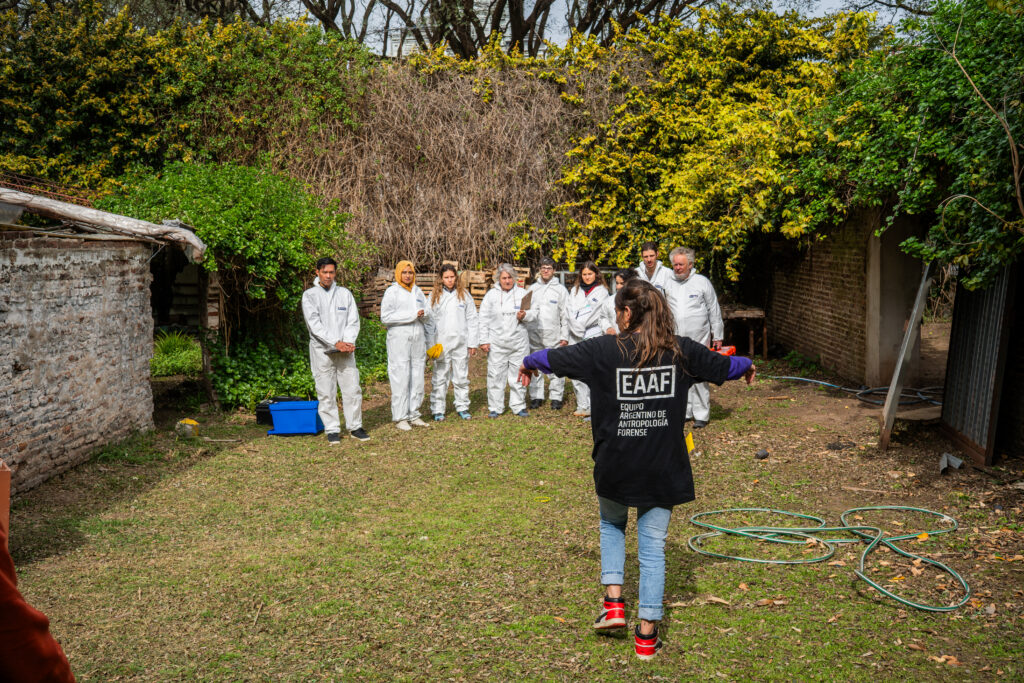
The workshop was held at the EAAF headquarters in Buenos Aires and covered topics such as: The location of burial sites using new technologies, forensic archaeology with practical exercises in graves and surface findings, forensic bioanthropology with laboratory practices, forensic genetics in disaster victim identification (DVI), the application of stable isotopes in forensic contexts.
“Natural Traces” is a project that seeks to train forensic scientists in the analysis of non-human trace biological evidence through a transdisciplinary network linking academia, forensic laboratories, and scientific departments, among others. The program studies the evaluation and sampling of biological traces in air, soil, individual and common graves, and aquatic environments, combining forensic evidence and statistics for application in judicial processes.
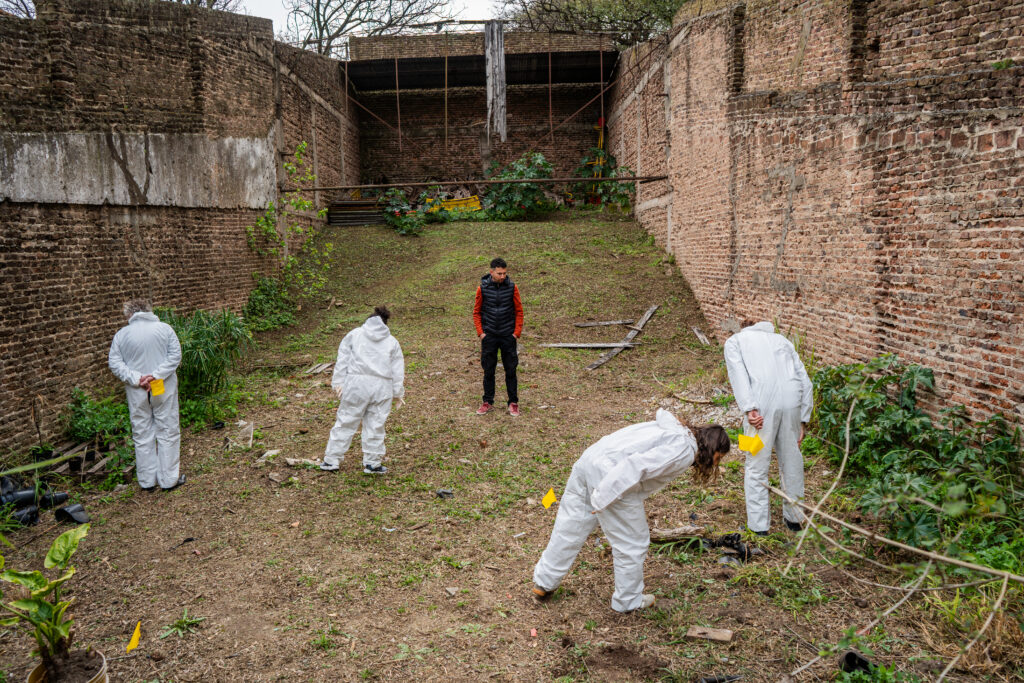
The group of international participants brought together researchers and academics with experience in various branches of forensic sciences: specialists in next-generation genetics and DNA sequencing, experts in analytical chemistry focused on the study of insects and post-mortem interval, and researchers focused on the analysis of fungi, pollen, and environmental microbiome for geolocation and biological evidence analysis. The meeting also included professionals applying artificial intelligence, interpretation of non-human clues, and mixed samples in judicial proceedings, as well as specialists in molecular methods for animal traces, forensic acarology, and diatom analysis.