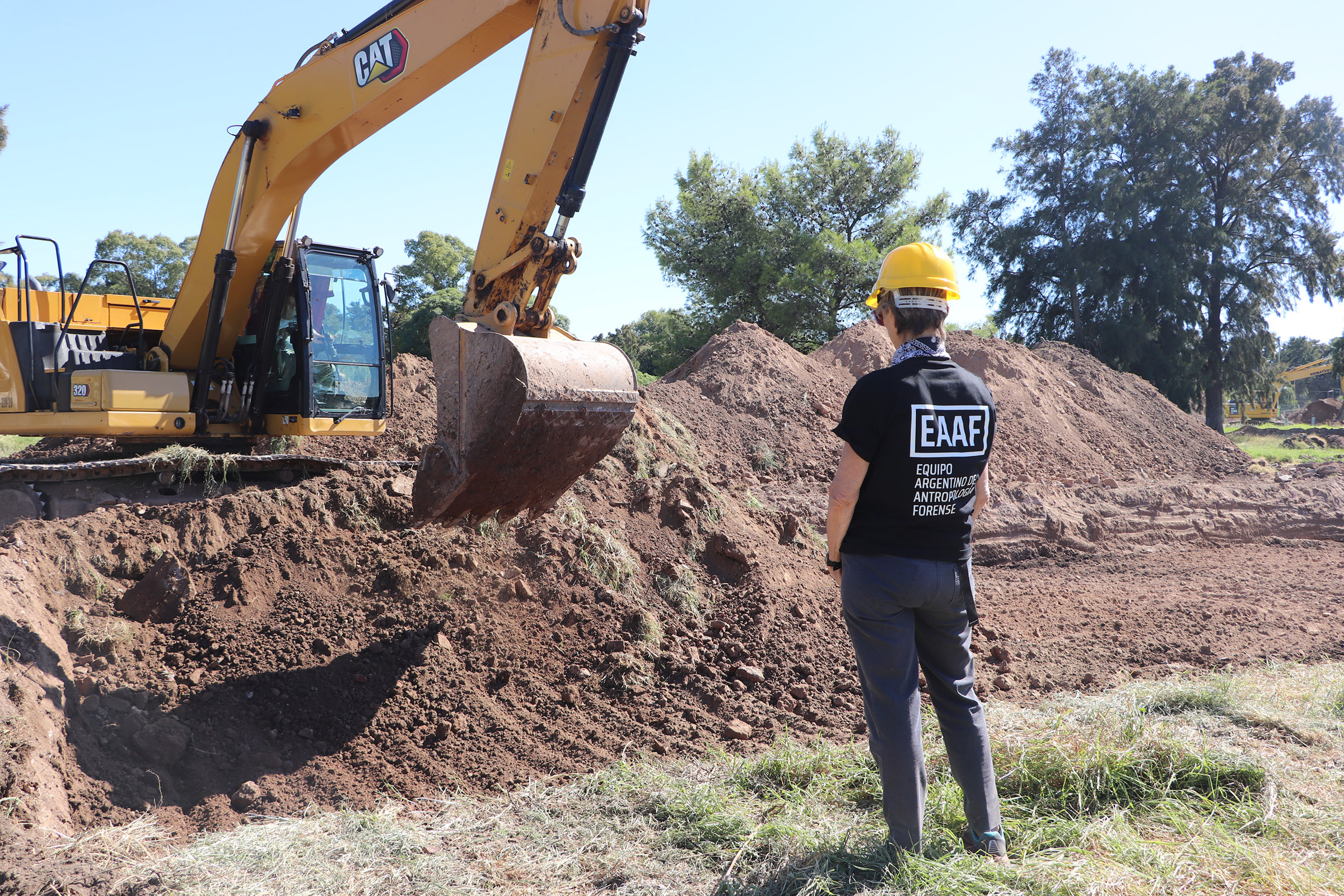
The Argentine Forensic Anthropology Team (Equipo Argentino de Antropología Forense, EAAF) works to search for, recover, identify and return missing or disappeared persons. It is a scientific non-governmental organization, international in scope, that applies a multidisciplinary approach to its forensic investigations. It provides families with support and answers, and submits evidence to the judicial system in cases of human rights violations and other crimes. It also collaborates on strengthening public policies in the forensic field through training and advocacy.
ABOUT EAAF
Around the world, wars, armed conflicts and state repression are responsible for the disappearance and death of thousands of people. Migration, organized crime, racism and ongoing violence against women and LGBTIQ+ persons are the backdrop to the loss of hundreds of thousands of lives. In some places, these disappearances are systematic – the result of actions planned by the state or by private individuals. In others, disasters or accidents leave behind victims who are difficult to find. Sometimes, to understand these involuntary absences, they must be investigated on a case-by-case basis until explanatory factors are found.
Communities organize in order to search for their loved ones, procure justice, promote memory and demand public policies. EAAF builds scientific knowledge to contribute to these social demands. One of its pillars is providing close and respectful support to the families who trust the Team.
Main Lines of Work
EAAF works in varied contexts, mainly on cases of disappearances resulting from state or political violence.
The migration crisis involving people displaced by multiple forms of violence, climate change or the pursuit of better conditions has led to thousands of missing people worldwide. This is one of the greatest challenges for forensic systems today, due to both its scale and dynamics as well as its transnational nature, involving countries with different frameworks and practices. In many regions of the world, this phenomenon has taken on the hallmark of a humanitarian crisis.
These phenomena often overlap with and compound others, such as organized crime, hate crimes or post-conflict scenarios, making forensic intervention more complex.
Another of EAAF’s lines of work relates to present-day disappearances, which occur under democracy due to deficiencies in institutions linked to identification, flaws in judicial investigations, and a lack of efficient forensic databases.
EAAF also seeks to influence public policy in the forensic field by providing training and promoting protocols and guidelines on topics linked to its lines of work.
Interdisciplinary and Global Coordination
EAAF was created to address the enforced disappearance of people as a method of repression wielded by Argentina’s last military dictatorship. In the beginning, it focused on forensic archaeology, anthropology, forensic medicine and the emerging field of genetics. Since then, it has integrated knowledge from criminalistics, geosciences and statistics, among other disciplines. It has had its own forensic genetics laboratory since 2006.
Over the last four decades, it has worked in more than 65 countries across the Americas, Africa, Asia, Europe and Oceania, at the request of victims, non-governmental organizations, courts and governments.
Today it is an international organization with the ability to intervene when forensic work grounded in a human rights perspective is needed. Due to that scope, its actions are organized into geographic divisions: Argentina, South America, Central and North America, Africa and Eurasia. It also carries out work in other regions.
With a team of more than 60 members from different disciplines, EAAF has its central headquarters in Buenos Aires (Argentina), an office in New York (United States) and branches in Mexico, Spain and South Africa.
Its work spans three areas:
–Forensic Investigation: Its main purpose is to search for, recover and identify missing or disappeared persons, return their remains to family members, and present scientific evidence in the courts investigating what occurred. It coordinates complex investigations involving fieldwork and laboratory work, applying search and identification technologies in an innovative way.
–Public Policy: EAAF participates in developing recommendations and protocols to help states strengthen their forensic capabilities and set standards for investigating human rights violations. It collaborates on efforts to forge cooperative responses by different states in transnational cases and contributes to forensic protocols for cases involving missing migrants.
–Training in Forensic Sciences: EAAF has an international training program designed for judges, prosecutors, forensic specialists, investigators from security forces, government officials, civil society organizations, associations of victims’ families and journalists.
OUR TEAM
EAAF’S HISTORY
Over the course of 40-plus years, EAAF has grown from a small founding group – formed in 1984 to address the disappearances caused by state terrorism in Argentina – into a multidisciplinary team that intervenes around the globe in cases of violence that take on distinctive characteristics, yet share a common need for answers.
Clyde Snow and the Foundation
When Argentina returned to democracy in late 1983, several judges ordered the exhumation (disinterment) of people buried anonymously who were thought to be those reported as forcibly disappeared. These exhumations were carried out by members of the security forces in a non-scientific manner, resulting in the loss of evidence critical to identification and to determining the cause of death.
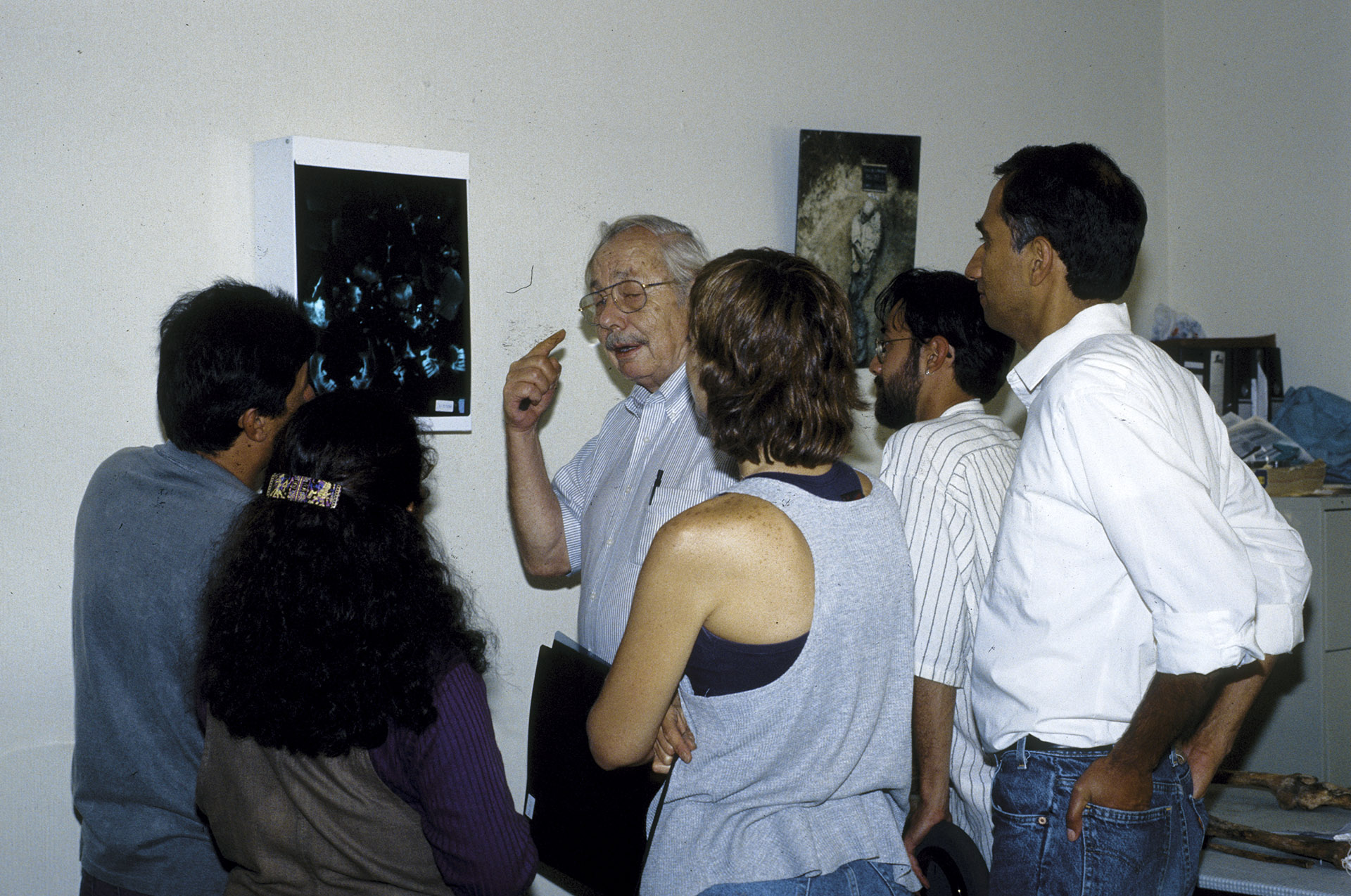
Months later, in early 1984, the National Commission on the Disappearance of Persons (Comisión Nacional sobre la Desaparición de Personas, CONADEP) and the Abuelas de Plaza de Mayo requested the assistance of Eric Stover, then director of the Science and Human Rights Program at the American Association for the Advancement of Science (AAAS), based in the United States. Among the AAAS delegation members who arrived in Argentina was Clyde Snow, one of the world’s leading forensic anthropologists, at a time when that field was still taking shape. Given the precarious conditions and carelessness that prevailed during the initial exhumations, Snow proposed building local scientific capacities to search for the bodies of the disappeared. To begin the exhumations and analysis of the skeletal remains, he turned to young archaeologists, anthropologists and doctors. Thus, the Argentine Forensic Anthropology Team was born.
Snow trained the founding members: Patricia Bernardi, Mercedes Doretti, Luis Fondebrider, Darío Olmo, Alejandro Incháurregui and Morris Tidball-Binz. He helped them establish the organization and make it grow. And he participated in numerous exhumations and identifications. This was the start of forensic anthropology with a human rights perspective.
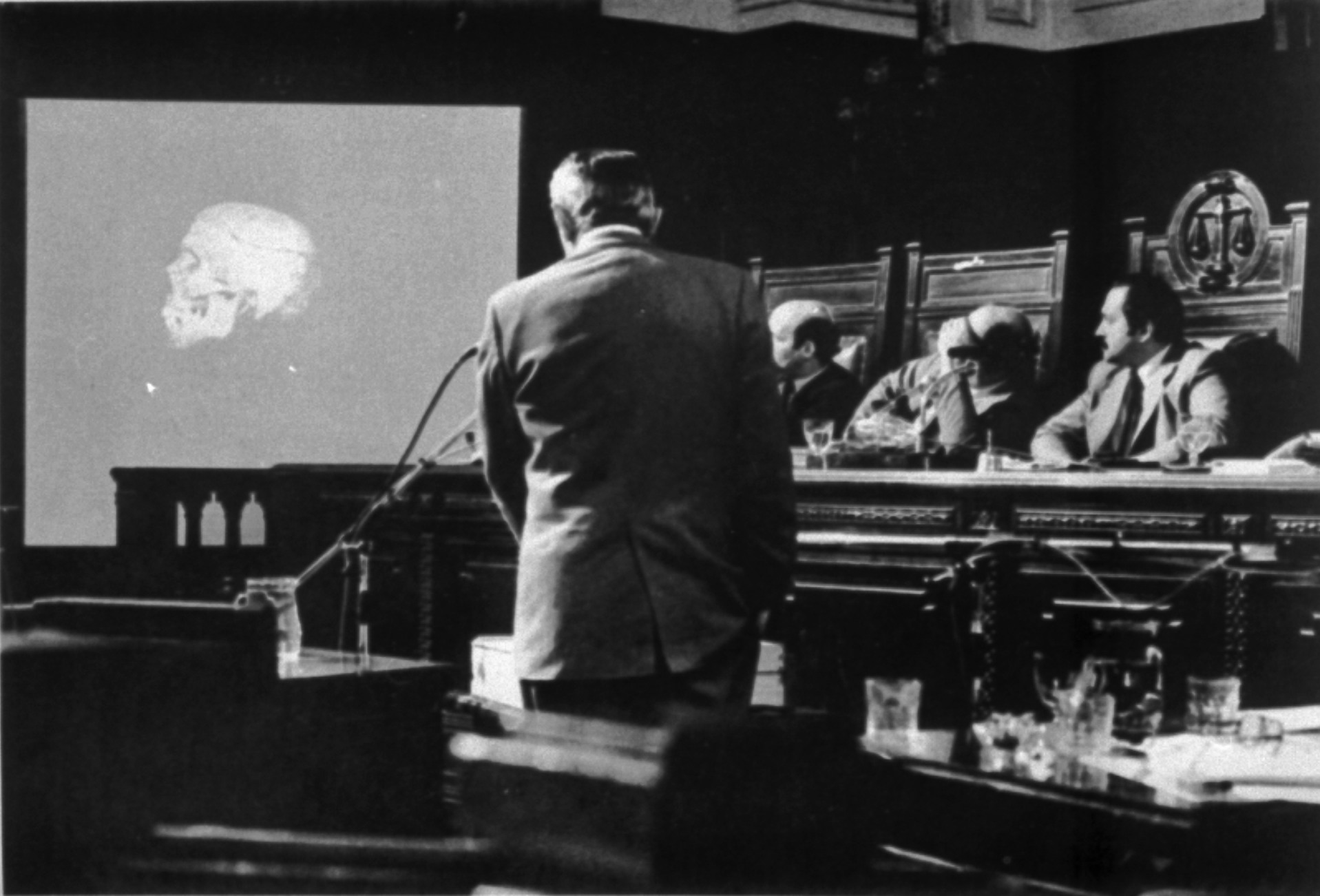
Snow’s testimony at the Trial of the Military Juntas in Argentina proved crucial to demonstrating scientifically that the disappeared persons had been murdered, based on analysis of the injuries on recovered skeletons. Until his death in 2014, Snow shared more than 30 years of work with EAAF. In his memory, EAAF’s headquarters in Buenos Aires is named the Clyde Snow Building.
Around the World
In the 1970s and early 1980s, many Latin American countries experienced periods of intense political violence and repression. The state, which was often controlled by military governments, committed human rights violations against activists from social, trade union and political-military organizations. In the 1980s, the need to investigate these crimes arose in many of these countries. Forensic anthropology’s application and development in the investigation of human rights violations grew out of this need.
The Team’s first trip was to Manila, in 1986, in the context of a newly created commission to investigate the crimes of Ferdinand Marcos that was being led by Corazón Aquino, then president of the Philippines. Since then, requests for assistance have multiplied. Brazil, Honduras, Chile, Bolivia, Uruguay, Peru, El Salvador, Guatemala and Colombia were the first countries to call upon EAAF.
With that acquired experience, EAAF began to be called upon as an expert in judicial and humanitarian investigations by the International Committee of the Red Cross, by special transitional justice mechanisms, by courts and special tribunals in Africa and Europe, by the International Criminal Court, and by various states, local courts and tribunals, and special commissions of inquiry. Whenever possible, it collaborated with countries to improve local forensic capabilities and strengthen investigative systems, and it accompanied families in their searches.

WHO CALLS UPON EAAF
AWARDS AND DISTINCTIONS
2026 – Special distinction, by the legislature of Córdoba, Argentina.
2026 – Tribute as a key institution for the defense of human rights, by the Consejo Latinoamericano de Ciencias Sociales (Clacso).
2025 – Doctor Honoris Causa, by the Universidad Nacional de Jujuy, Argentina.
2025 – Gernika Award for Peace and Reconciliation 2025, by the town council of Gernika-Lumo, Spain.
2025 – Designation of a “Space for Reflection and Memory Argentine Forensic Anthropology Team” at the entrance to the municipal cemetery, by the city council of Chascomús, Argentina.
2025 – Premio Internacional, by the Fundación Mario Benedetti, Uruguay.
2023 – Memorial para la Paz y la Solidaridad entre los Pueblos de América distinction, by the Servicio de Paz y Justicia (SERPAJ) in the context of commemorating the 40 year anniversary of the return of democracy, Argentina.
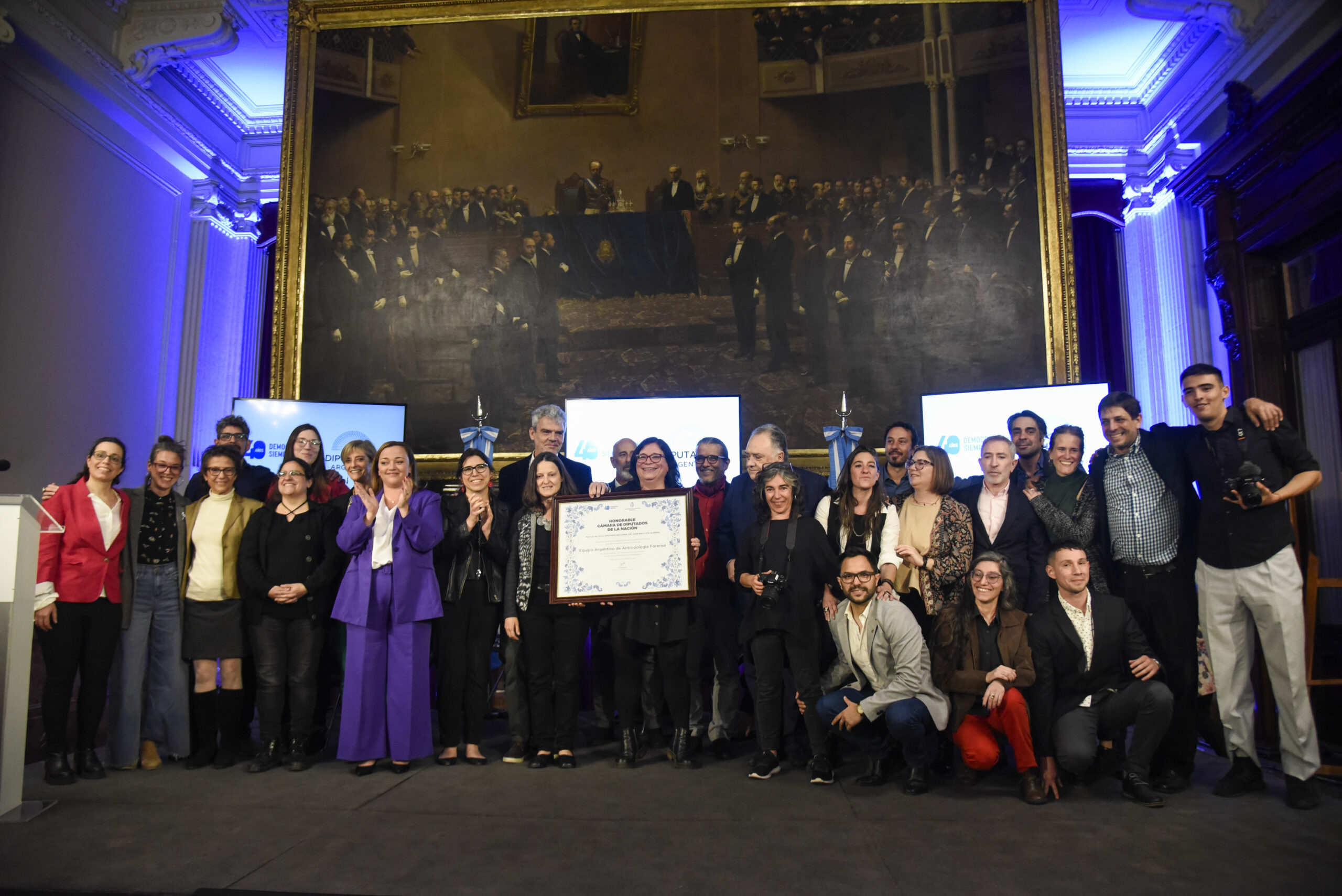
2023 – Honorable Mention Deputy Juan Bautista Alberdi, by the Chamber of Deputies of the Argentine Nation.
2023 – Special recognition for its contributions as a civil society organization, by the XIII edition of the Premios Perfil in commemoration of 40 years of democracy, Argentina.
2023 – Tribute for its contribution to democratic values, by Revista Noticias, in the context of the publication’s 34th anniversary.
2023 – Recognition for the identification of fallen combatants in the Islas Malvinas, by the Sociedad Científica Argentina (SCA).
2022 – Recognition for its contribution to identifying fallen Argentine combatants in the Islas Malvinas, by the Legislature of the City of Buenos Aires, Argentina.
2022 – Reconocimiento Sara Solarz a la búsqueda de la Verdad y la Justicia, by the Consejo de Sobrevivientes y Testimoniantes del ex Centro Clandestino de Detención, Tortura y Exterminio (CCDTyE) ESMA, Argentina.
2019 – Achievement award for 35 years in pursuit of justice and truth, by the Friedrich-Ebert-Stiftung (FES) Foundation.
2019 – Premio Iberoamericano de Derechos Humanos, by the Instituto Mexicano de Victimología, Mexico.
2019 – Premio Perfil como organización de Bien Público, by Editorial Perfil, Argentina.
2019 – Recognition for EAAF’s 35 years of work, by the Chamber of Senators of the Province of Buenos Aires, Argentina.
2018 – Premio Juan Gelman, by the Consejo Latinoamericano de Ciencias Sociales (CLACSO) in conjunction with the Universidad Nacional de Quilmes, Argentina.
2018 – Recognition for its commitment and humanitarian work in the process of identifying fallen combatants in the Islas Malvinas, by the Chamber of Deputies of the Argentine Nation.
2018 – Recognition for its work as part of the Islas Malvinas Humanitarian Plan, by the Chamber of Senators of the Province of Buenos Aires, Argentina.
2018 – Clyde Snow Award, by the American Academy of Forensic Sciences, United States.
2016 – Honorary award, by the African Society of Forensic Medicine.
2014 – Human Rights Award, by the International Association of Forensic Sciences, Seoul, South Korea.
2014 – Premio Ciencia y Derechos Humanos, by the Observatorio de Derechos Humanos of the Senate of the Argentine Nation.
2014 – Doctor Honoris Causa to EAAF’s founders, by the Universidad de Buenos Aires (UBA), Argentina.
2013 – Premio Derechos Humanos, by the Delegación Asociaciones Israelitas Argentinas (DAIA), Argentina.
2011 – Premio Democracia, by the Centro Cultural Caras y Caretas, Argentina.
2008 – Diploma al Mérito Instituciones-Comunidad-Empresa, by Fundación Konex, Argentina.
2007 – MacArthur fellowship to Mercedes Doretti, by the MacArthur Foundation, United States.
2007 – Premio Eduardo Pimentel, by the Government of the Province of Buenos Aires, Argentina.
2006 – Human Rights Award, by the Washington Office on Latin America (WOLA), United States.
2002 – Premio Derechos Humanos, by the Asociación Pro Derechos Humanos de España, Madrid, Spain.
1991 – Monitoring Award, by Human Rights Watch, United States.
1991 – Medalha Chico Mendes de Resistência, by the Grupo Tortura Nunca Mais, Rio de Janeiro, Brazil.
1989 – Reebok Human Rights Award, by Reebok Foundation, United States.